
Heat pump vs log burner. It’s one of the most common questions I get on quotes around Palmerston North and Feilding, usually from someone standing next to a log burner they’ve had for years and wondering if it’s time for a change. The straight answer: for most Manawatū homes a heat pump is cheaper to run, but there are real situations where a log burner still holds its own.
Here’s how the two stack up on running cost, and on the stuff that doesn’t show up on a power bill.
How each one makes heat
The difference in running cost starts with how they work.
A log burner makes heat by burning wood. What you get out depends on the wood you put in, how dry it is, and how well the fire’s run. Your fuel is firewood, so your running cost is whatever your firewood costs you.
A heat pump doesn’t burn anything. It uses electricity to move heat from the outside air into your home, even on a cold morning. That’s why a good heat pump gives you around three units of heat or more for every unit of power it uses. A plug-in heater only gives you one. Your running cost is your power bill.
So the real comparison isn’t “wood vs electricity”. It’s what your firewood actually costs you vs what a well-run heat pump costs on your power plan.
When a log burner can be cheaper to run
Let’s be fair to the log burner. It can come out ahead on running cost if:
- Your wood is free or close to it. Off your own land, from a mate, or from a reliable source you don’t pay much for.
- You’ve got the space to store and dry it. Wood needs to be properly dry to burn well. Wet wood gives you less heat, more smoke and a dirtier flue.
- You only need to heat one main room. A burner’s heat mostly stays in the room it’s in.
- Someone’s home to run it. A fire needs loading. It can’t warm the house before you get home.
If that’s you, a log burner can be a cheap way to keep the lounge cosy, and I won’t tell you otherwise.
The costs of a log burner people forget
Where the log burner loses ground is all the stuff that isn’t the wood itself:
- Bought firewood isn’t cheap. Most people in town are buying it, and that’s the running cost to compare against a heat pump.
- Your time. Stacking, carrying, lighting, loading, cleaning out the ash. It adds up over a whole winter.
- The flue. A burner needs its flue swept regularly to stay safe, which is another job and another cost.
- Heat in one room only. The lounge is toasty and the bedrooms down the hall are cold. Lots of people end up running plug-in heaters in the bedrooms as well, and those are the dearest heat there is.
- No heat on a timer. You can’t come home to a warm house or wake up to one. The fire’s out by morning.
- Putting a new one in. If you’re starting from scratch or replacing an old one, a new burner means a flue and a building consent. That’s a big setup cost before you’ve burnt a single log.
Why a heat pump usually wins on running cost
For most homes we see around Palmy and Feilding, a heat pump comes out cheaper once you look at the whole winter, not just the cost of an evening:
- More heat per unit of power. That three-units-or-more figure is what makes the difference.
- Steady, controlled heat. Set it around 20 degrees and it holds the room there. No overheating the lounge and then letting it go cold.
- Timers. Warm the house half an hour before you get up or get home, and don’t heat it while it’s empty.
- No firewood bill and no labour. You press a button.
- It helps with the damp. Warmer air holds moisture better, and most units have a dry mode too, which is handy in our damp Manawatū winters.
The catch is that a heat pump only runs cheaply when it’s the right size for the room and installed properly. Too small and it runs flat out all winter without keeping up. Too big and it wastes power switching on and off. That’s why we measure your rooms on every quote rather than guessing. We’ve written more on this in what size heat pump do I need.
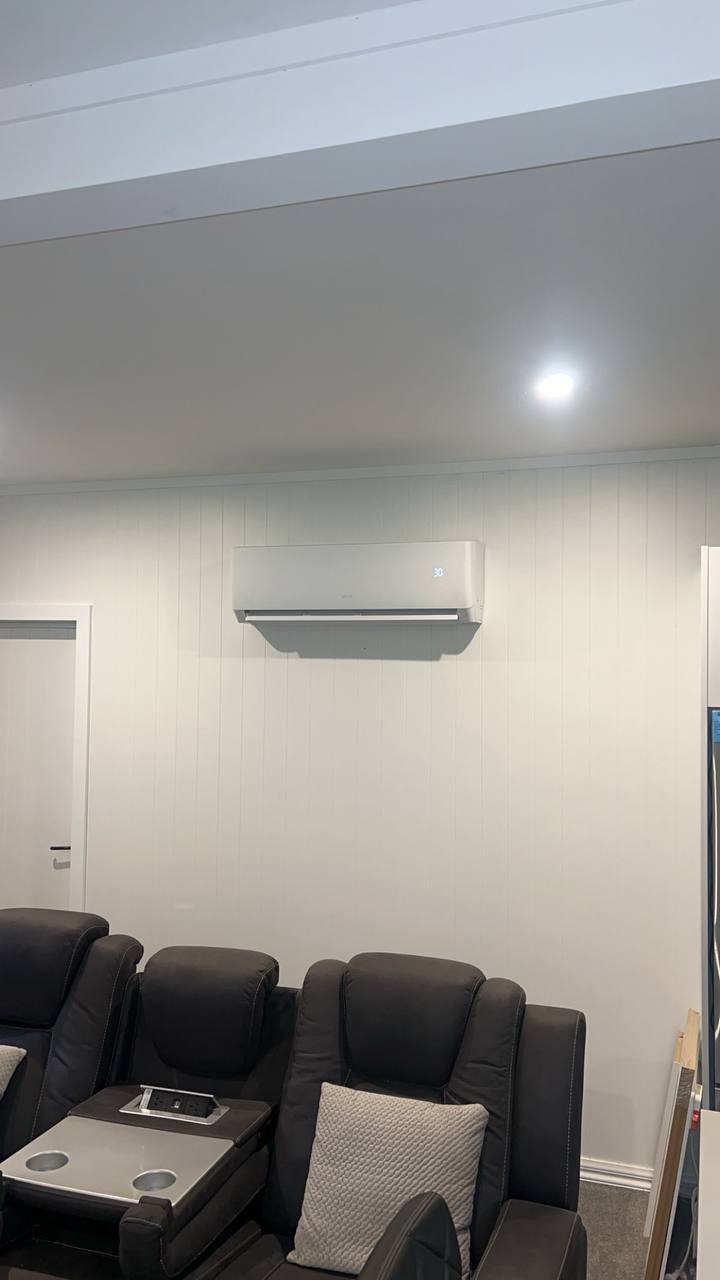
Here’s the sort of thing we mean. A hi-wall unit in a finished Manawatū lounge, mounted where it can push warm air down the whole length of the room.
If you want the detail on running costs, have a look at what a heat pump actually costs to run in NZ.
Can you keep both?
Yes, and plenty of people do. If you’ve got a burner you like and a cheap wood supply, there’s nothing wrong with lighting it on the coldest nights and letting a heat pump do the everyday work: warming the house in the morning, taking the chill off when you get home, and heating the rooms the fire doesn’t reach.
What I’d steer people away from is relying on the burner alone and then running plug-in heaters in every bedroom to make up for it. That’s usually the most expensive way to heat a home.
So which one is cheaper for you?
It comes down to a few honest questions:
- Do you pay for your firewood? If yes, the heat pump usually wins on running cost.
- Do you need more than one room warm? If yes, the heat pump usually wins.
- Is someone home to run a fire? If not, a heat pump on a timer makes a lot more sense.
- Have you got free, dry wood and only need the lounge warm? Then a burner can still be a cheap option, and a heat pump is more about convenience and the other rooms.
Frequently asked questions
Is a heat pump cheaper to run than a log burner? For most Manawatū homes buying their firewood, yes. A log burner can be cheaper if your wood is free and you’re only heating one room.
Does a heat pump work on a frosty Palmy morning? Yes. A heat pump still pulls heat out of cold outside air. A properly sized unit will keep up through a normal Manawatū winter, which is why sizing it right matters so much.
Should I take out my log burner if I get a heat pump? Not necessarily. Lots of people keep the burner for the coldest nights and use the heat pump day to day. It’s your call.
Keen to see what a heat pump would do in your home?
If you’re weighing up a heat pump against your log burner, we’ll come out, measure up, and tell you honestly whether it’s worth it for your place. More on how we work on our heat pump installation page, or get a free quote whenever suits, no rush.